A poetic and insightful look at Christmas Day as a feast of light, hope, and renewal. Traditions, symbolism, and spiritual meaning.
Christmas Day – The Feast of Light Born in Darkness
December 25th is more than a date on the calendar. It is a moment held in the collective memory of humanity. On this day, time seems to slow down, even in our restless, hyperconnected world. Christmas Day, the Feast of the Nativity, celebrates the birth of Jesus Christ, but its symbolism reaches far beyond theology. It speaks to universal human longings: renewal, hope, light, and love.
Origins
The origins of Christmas as a liturgical feast go back to the 4th century. The earliest record of its celebration in Rome dates to the year 336. The choice of December 25th was deliberate. It coincided with ancient festivals of the winter solstice. During these festivals, people celebrated the return of the sun. Christianity embraced this symbolism. It transformed it into the birth of Christ as the birth of the true Light that no darkness can overcome.
Liturgy
The liturgy of Christmas is rich and layered. Three distinct Masses are celebrated. The Midnight Mass, the Dawn Mass, and the Day Mass each show different dimensions of Christ’s birth. These are His eternal generation from the Father, His birth in human flesh, and His birth in the human heart. Midnight speaks of light breaking into darkness; dawn evokes awakening; the day celebrates fullness and radiance.
The color of the feast is white — the color of joy, purity, and new beginnings. It reflects the human wish for renewal. People long for a fresh start. They seek a moment of clarity in the midst of winter’s stillness.
Nativity Scene
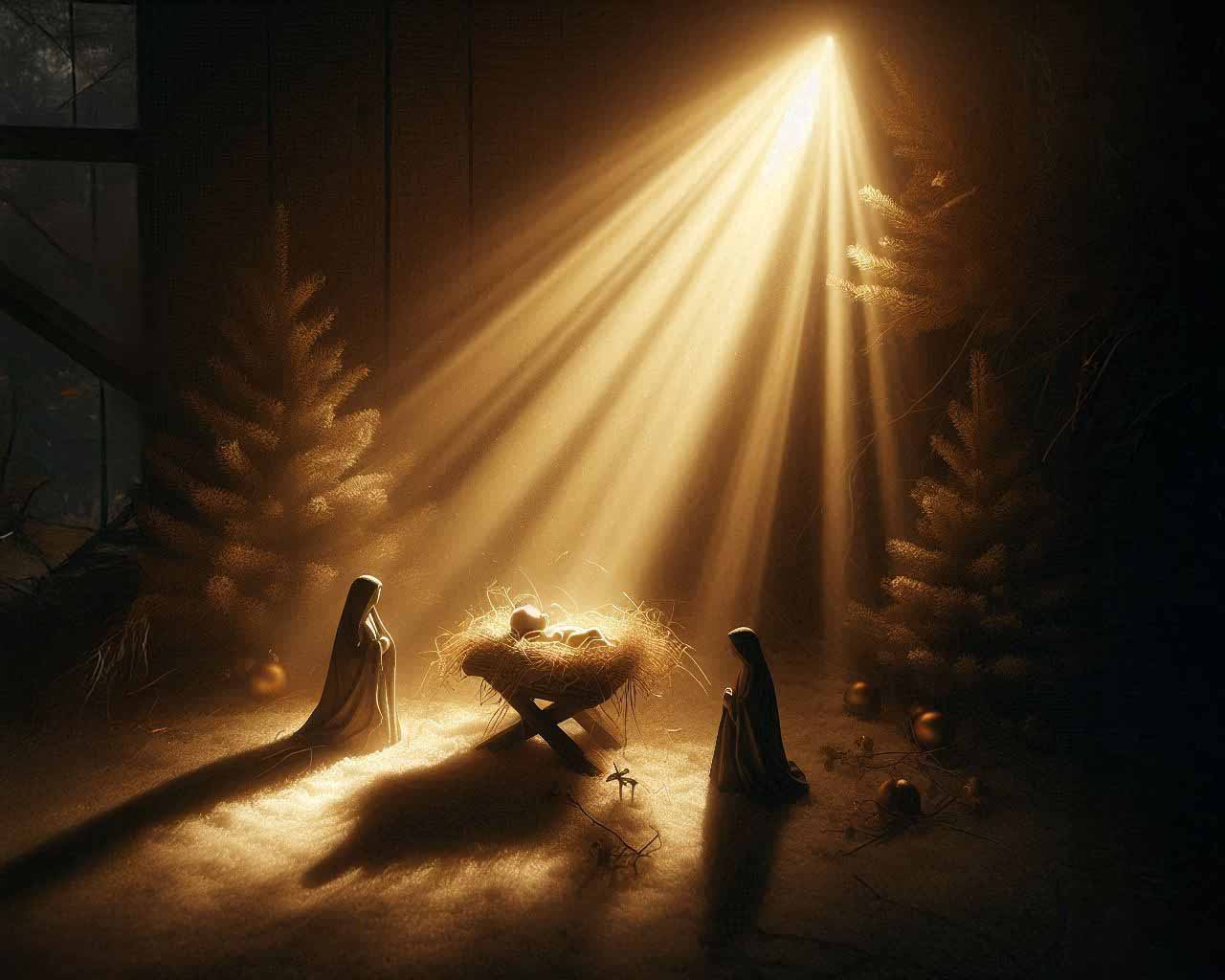
One of the most beloved symbols of Christmas is the nativity scene. The tradition of creating a crib or manger scene is attributed to St. Francis of Assisi, who in 1223 prepared the first live nativity to help people contemplate the mystery of the Incarnation. The manger is a reminder that greatness often enters the world quietly, without spectacle. It invites us to look for the sacred in simplicity.
Christmas Day has long been linked to feasting. After the fasting and anticipation of Advent, families gather around tables filled with festive dishes. Yet the feast is not merely about abundance; it is about sharing, gratitude, and the warmth of community. In many cultures, working on Christmas Day was traditionally discouraged. The day was meant to be kept in peace. It was a time for reflection and rest.
Child
The spiritual heart of Christmas lies in the image of the child. A child embodies vulnerability, trust, and the promise of new beginnings. Pope John Paul II once urged believers to “pause before the Christ Child.” This call resonates even more deeply today. In a world marked by uncertainty, conflict, and noise, the child’s quiet presence in the manger signifies enduring hope. This hope can’t be extinguished.
Today
Christmas in 2025 is both ancient and new. Families gather, candles glow, and for a brief moment the world feels gentler. Even those who do not approach the day from a religious perspective often sense its unique atmosphere. They feel a stillness and a warmth. There is a reminder that something meaningful is unfolding.
Ultimately, Christmas is not only a remembrance of a historical event. It is an invitation. An invitation to let light enter the places within us that feel dark. To rediscover hope. To allow love to take shape in our actions, our words, our relationships.
In the heart of winter, light is born. And with it, the possibility of transformation.


Leave a Reply