An essay exploring Umberto Eco’s The Name of the Rose. Why do we return to this novel again and again? A look at the book, film, series, and audiobook.
The Labyrinth of Meaning: Returning to The Name of the Rose
There are books we read once and set aside. And then there are books we return to. It feels like returning to a place that once welcomed us and left a mark. Umberto Eco’s The Name of the Rose belongs unmistakably to the latter. Not because we forget the plot, but because we ourselves change. And as we change, the book changes with us.
Eco wrote a novel that presents itself as a detective story set in a monastery. Yet, it transcends a simple mystery. It reflects on the power of knowledge, considers the fear of interpretation. The danger of laughter as a threat, and memory’s role as a weapon. It is a novel about books that do not wish to be read. It is also about people who fear what will happen if they are understood.
The Monastery
The monastery is not merely a backdrop. It is a closed world. It is a microcosm of medieval Europe, a timeless model of any institution that claims a monopoly on truth. A place of silence, ritual, and order, but also of fear, repression, and violence. Eco shows that order and chaos are not opposites, but two sides of the same coin.
The Library
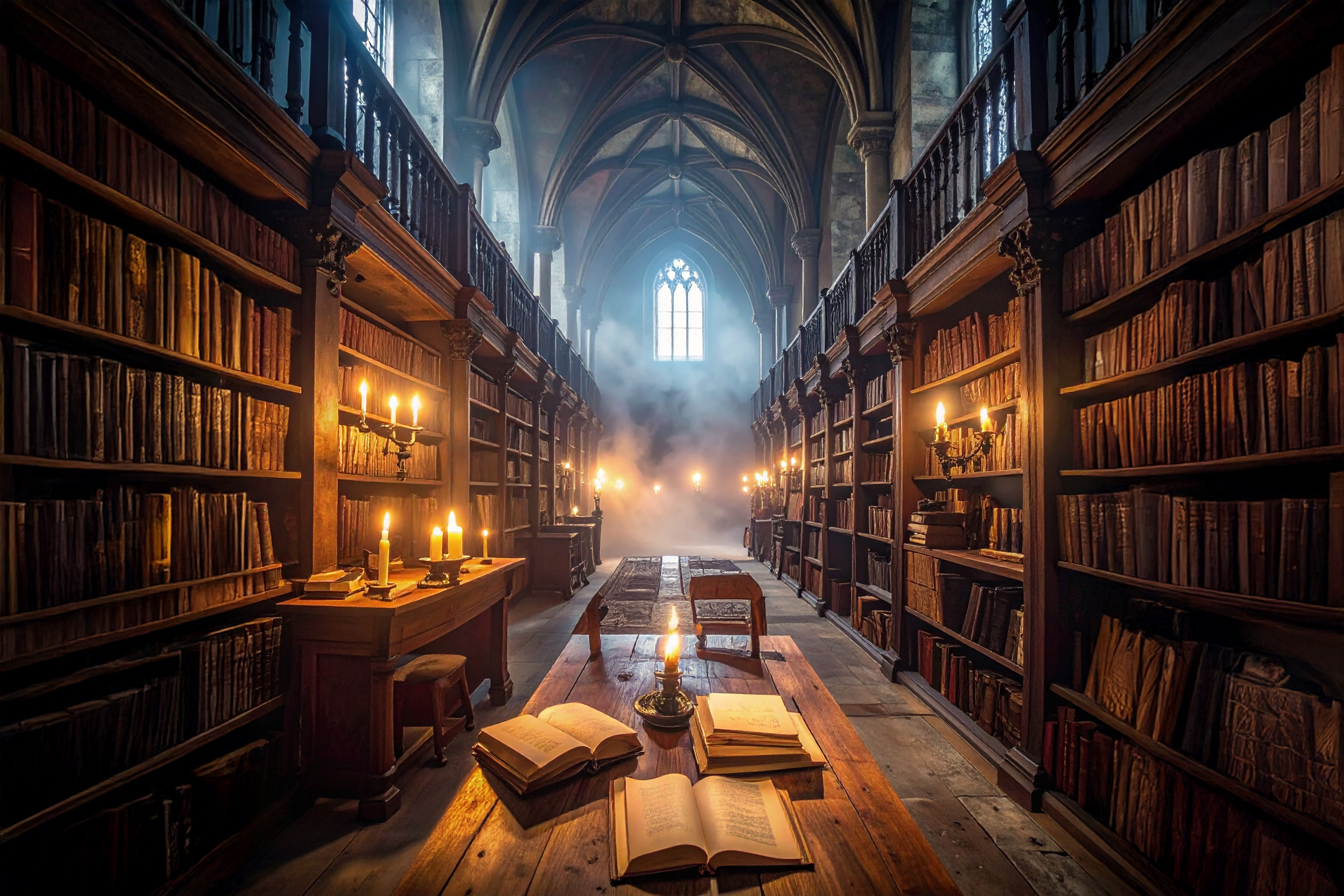
One of the most powerful motifs in the novel is the library—a labyrinth both literal and symbolic. The library is the memory of the world, yet also a trap. A place where knowledge accumulates but access is restricted. Eco anticipates contemporary debates about censorship, access to information, and who has the authority to define truth. The library in The Name of the Rose is not neutral; it is political.
William of Baskerville
William of Baskerville embodies another form of power: the power of reason, doubt, and interpretation. He is not an infallible hero. He makes mistakes, revises his conclusions, and questions his own approaches. His strength lies precisely in this uncertainty. Through William, Eco suggests that truth is not something we own, but a process that requires humility.
William and Adso
The relationship between William and Adso is both that of teacher and student, and of experience and innocence. Adso is the witness, the scribe, the memory of the story. His retrospective voice lends the novel a deep melancholy. Everything we read belongs to a world already lost, recoverable only through words.
The Laughter
One of the novel’s most provocative themes is laughter. Laughter as a threat to order, as a subversive force that undermines authority. Fear of laughter is fear of relativism, of the possibility that nothing is absolute. Eco subtly but firmly shows that totalitarian thinking—religious or political—can’t tolerate humor. Laughter opens the space for doubt.
Movie and Series
The film and television adaptations offer different entrances into this world. The film emphasizes darkness, stone, fire, and shadow—a visual meditation on fear and violence. The series allows for a slower rhythm, more detail, more breathing room. The audiobook returns the text to its oral roots. It evokes the experience of a manuscript being read aloud by candlelight in a monastic cell.
The Novel
Repeated returns to this work are no accident. The Name of the Rose is not a novel that can be exhausted. It functions as a mirror. At different stages of life, we see different things in it. Sometimes the detective plot captivates us, sometimes the philosophical dialogues, sometimes the silence between the lines.
Eco famously claimed that once a book is written, the author dies and only the text remains. The Name of the Rose confirms this idea. Each reader constructs their own version of the labyrinth. There is no single correct interpretation. This is the novel’s strength: it teaches us how to read—not only texts, but the world itself.
Conclusion
In an age overwhelmed by information, where truth becomes a battlefield, The Name of the Rose feels disturbingly relevant. Eco reminds us that knowledge without humility can become an instrument of oppression. That fear of interpretation leads to violence. And that laughter, doubt, and openness are among the most valuable things we have.
Returning to The Name of the Rose is not an act of nostalgia. It is an act of vigilance. A reminder that labyrinths exist not only in libraries, but in our minds. And that the way out does not lie in absolute truths, but in the courage to question.


Leave a Reply