A reflective essay exploring how we confront our past, release old patterns, and find the quiet courage to move forward. A thoughtful meditation on change, personal growth, and the transformative power of acceptance.
Wrestling With the Past and Finding the Courage to Move Ahead
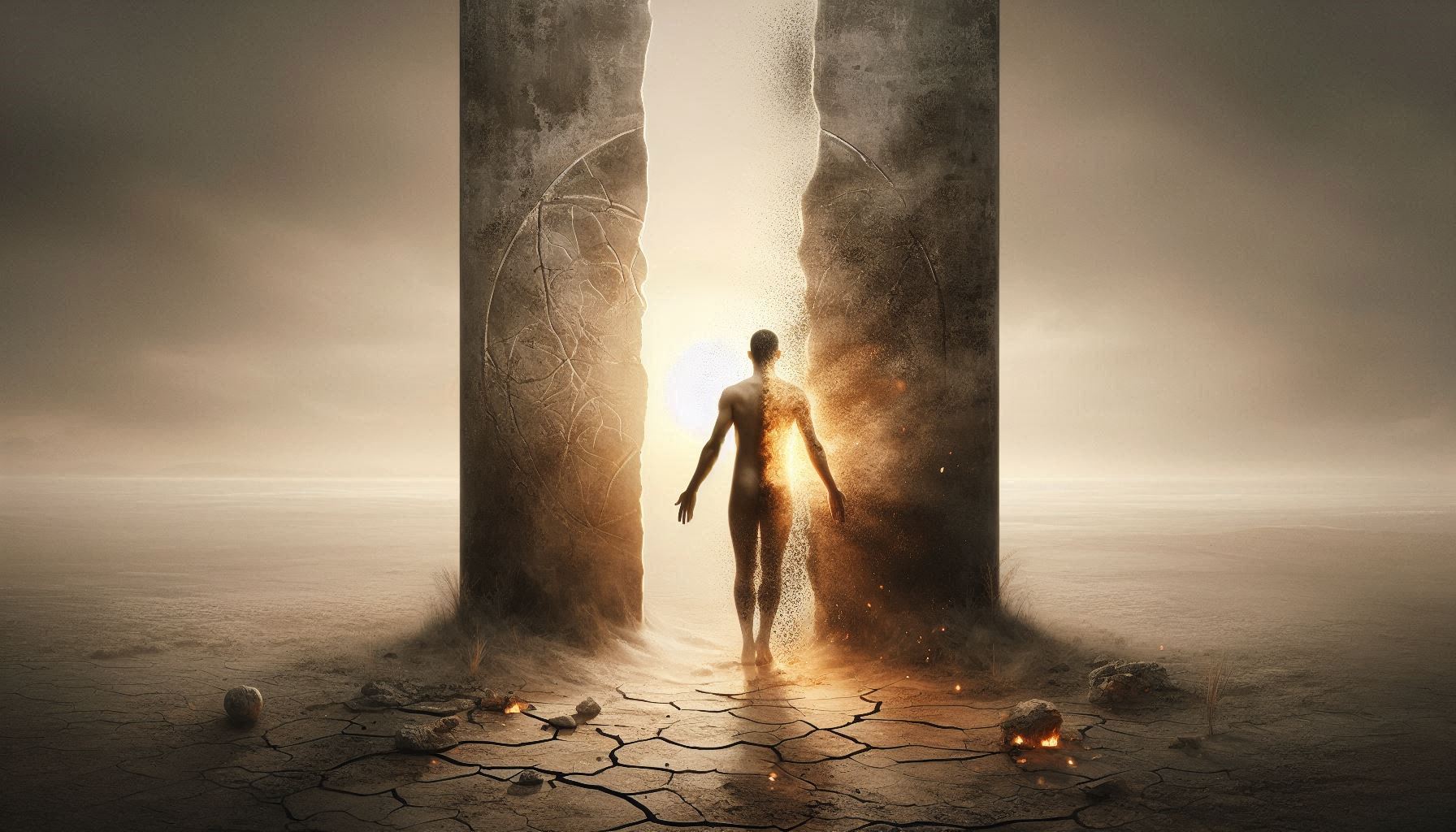
There are moments in life when a person suddenly realizes they are standing on the threshold between two worlds. One world is made of everything that has already happened. It consists of memories, decisions, mistakes, and victories. Includes losses and dreams fulfilled. It also holds dreams abandoned before they ever took shape. The other world is made of everything that has not yet arrived. It is open and uncertain. Sometimes it’s frightening. Other times, it’s full of promise. And between these two worlds lies a narrow space. Here, a quiet but decisive struggle unfolds. We must face the past without becoming trapped in it. We must step onward without resisting our own growth.
People often say that the past is a teacher. But a teacher can be strict, gentle, or even unfair. The past shapes us, but it is not our master. And yet this is often the hardest truth to accept. A person spends years trying to change their life. They find themselves circling back to the same place repeatedly. Old patterns return as if to remind us that some lessons remain unfinished. And so the struggle begins — not with the world, not with other people, but with our own history.
This struggle is not a crime. On the contrary, it is a natural part of being human. Anyone who claims to live without conflict with their past is not telling the truth. Alternatively, they have never truly looked at it. The past is like an old fire. It can warm us. Yet, it can also burn us if we linger too close. Sometimes we return to it. We add one last piece of wood, or we let the flames die out. The real problem arises when we start to resist moving ahead. When the past becomes an anchor instead of a compass.
When the Past Turns Into Armor
Many people carry their past like armor. It makes sense — armor protects. It shields us from pain, disappointment, and the repetition of old mistakes. But armor has a price: it is heavy. And heavy things slow us down. A person in armor can survive a battle, but they can’t run. They can’t dance. Can’t embrace someone fully. They can’t breathe deeply.
The armor of the past is made of the sentences we repeat to ourselves: “I’ll never do that again.” “It always ends this way.” “I’m not the person who…” “I can’t afford to trust again.” These sentences become metal plates around the heart. And the longer we wear them, the less aware we are that they exist.
To wrestle with the past is to wrestle with this armor. It means removing it piece by piece, even when it hurts. Means admitting that some things that once protected us are no longer needed. It means recognizing that wounds we believed would never heal have long since closed — we simply stopped examining them.
The Quiet Courage to Move Ahead
Moving ahead does not mean forgetting. Forgetting is often impossible, and sometimes even undesirable. The past is part of our identity. But moving onward means refusing to resist our own future. It means accepting that life is not a closed story but a constantly shifting process. And that even though we have made mistakes, we are not defined by them forever.
The courage to move ahead is quiet. It does not in grand gestures but in small decisions. Waking up with the belief that today can be different from yesterday. Opening ourselves to new people even when others have disappointed us. Trying something new without knowing the outcome. Stopping the habit of apologizing for who we used to be and becoming curious about who we become.
This courage is born from acceptance. It is acceptance that the past was exactly what it was. It was no better and no worse. And that the future is neither punishment nor reward, but a space waiting to be filled.
When We Resist Change
There is a strange paradox: most people want change, yet fear it at the same time. We want a new life, but we don’t want to let go of old certainties. Want to grow, but we don’t want to risk anything. We want to be different, but we don’t want to abandon what we know.
And so we resist. Sometimes consciously, sometimes unconsciously. We resist new possibilities because they remind us of old disappointments. Resist new relationships because we see potential pain. We resist new paths because we don’t know where they lead.
But this resistance has a cost. The cost is stagnation. The feeling that life is not moving. The quiet conviction that “it’s too late.” And yet it isn’t. It is never too late. The only moment that is truly too late is the one in which we decide to stop trying.
The Past as a Map, Not a Prison
One of the most important steps in moving ahead is changing the way we look at our past. The past is not a prison. It is not a chain that holds us in place. It is a map. And maps are not meant to confine us — they are meant to show us where we come from.
A map can show us the dead ends we want to avoid. It can show us where we got lost and where we found strength. It can remind us that we survived things we thought would break us. And that we are capable of more than we imagine.
But a map is not the destination. The destination is always ahead.
A Ritual of Passage
Every person experiences moments that act as rituals of passage. Sometimes they are major events — birthdays, anniversaries, losses, beginnings. Sometimes they are small, quiet moments we only recognize years later. But they all share one thing: they move us from one state of being to another.
Wrestling with the past is one of these rituals. It is a process that prepares us for a new cycle. And every new cycle begins when we look at our life with renewed honesty. Not with guilt, not with regret, but with understanding.
This is why it is so important not to resist moving ahead. Because every step onward is proof that we are alive. That we can grow. That we can transform.
A Fire That Illuminates Instead of Burning
The past is a fire. It can burn us if we approach it without awareness. But it can warm us if we approach it with understanding. And it can illuminate our path if we learn to look at it differently.
Wrestling with the past is not a crime. It is an act of courage. But resisting the future — that is the real danger. Because life is movement. And whoever resists movement is already moving backward.
And so we stand on the threshold between two worlds. One behind us, one ahead. Between them lies a moment of decision. A moment when a person takes a breath and says, “I’m moving on.”
And in that moment, a new story begins.



Leave a Reply