A deep, inspiring essay about moving to pursue your dreams, overcoming fear, and embracing personal transformation. Explore the emotional, symbolic, and practical layers of starting over in a new place. A poetic reflection on life transitions.
Moving to Chase Your Dreams: On Fear, Silence, and the Courage to Start Again
There are moments in life when a person stands at a threshold. They are not quite inside, not quite outside. They are suspended in a space where the familiar loosens its grip. Here, the unknown begins to breathe. Moving to a new place in pursuit of one’s dreams is one of those moments. From the outside, it looks like a simple act: pack your belongings, close one door, open another. But anyone who has lived through such a transition knows that it is far more than a logistical shift. It is an internal migration, a reconfiguration of memory, identity, and want. And that is why it feels terrifying. But it is also why it is worth it.
The First Tremor: When the Idea Appears
Every move begins long before boxes are taped shut or keys are handed over. It begins with a tremor — a quiet, persistent thought that something needs to change. Sometimes it arrives as a whisper. Other times, it comes as a pressure in the chest. Occasionally, it’s a sudden clarity that the life you are living no longer aligns with the life you imagine.
This first tremor is subtle but decisive. It shifts the way you see your surroundings. Streets you once walked without thinking begin to feel too narrow. Rooms that once held you now feel like they are holding you back. Even the light in your home seems to fall differently. It hints that its work with you is nearly done.
The idea of moving is the first step of the journey. The body stays where it is, but the mind has already begun to walk.
Fear as a Companion, Not an Enemy
When the possibility of moving becomes real, fear inevitably arrives. It’s not the dramatic kind that paralyzes. It’s the quiet, persistent fear that sits in the stomach. It asks difficult questions: What if it doesn’t work? What if I’m making a mistake? What if the new place rejects me?
These questions are not signs of weakness. They are signs of care. We fear most deeply for the things that matter. If the dream were trivial, there would be no fear. Fear is the shadow cast by desire.
The mistake many people make is trying to silence fear. But fear is not meant to be silenced; it is meant to be understood. It is a compass pointing toward the edges of your comfort zone — and growth never happens at the center. Fear is not the enemy of dreams; it is their gatekeeper.
Packing as a Ritual of Memory
Packing is often described as tedious, but in truth it is one of the most intimate rituals of transition. Every object you touch carries a fragment of your past. A cup holds the memory of a morning. A book carries the echo of a thought. A piece of clothing remembers a version of you that you have forgotten.
As you place each item into a box, you are not merely organizing possessions. You are sorting through layers of yourself. Some things slip easily into the box. Others linger in your hands, heavy not because of their weight but because of the memories they carry.
And then there are the things you choose not to take. These are the quiet decisions that shape the future. Leaving something behind is not an act of loss but an act of clarity. It is the recognition that not everything is meant to follow you into the next chapter.
Packing is not about moving objects. It is about choosing which parts of your story you want to continue writing.
The Sound of a Door Closing
There is a particular sound that accompanies the closing of a door for the last time. It is a sound that resonates deeper than wood meeting metal. It is the sound of a chapter ending — a soft, final punctuation mark on a period of your life.
In that moment, you feel the weight of everything that happened within those walls. You remember the laughter, the disappointments, the quiet mornings, and the restless nights. Feel gratitude and grief intertwined. You feel the strange sensation of belonging and departure coexisting.
But as the door closes, something else opens — not physically, but internally. A space within you expands, making room for what is yet to come.
Arrival: The Shock of Emptiness
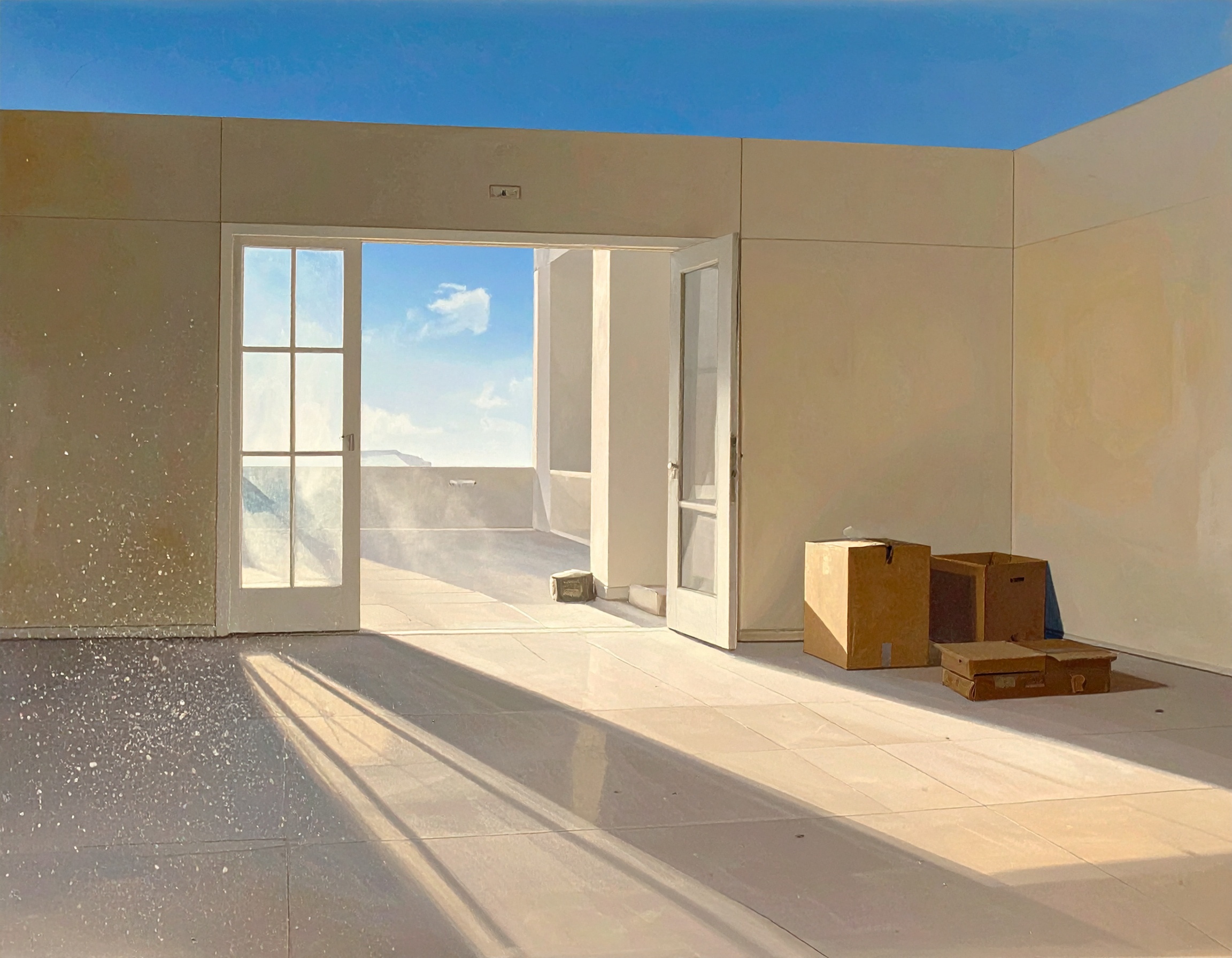
Stepping into a new place for the first time is like stepping into a blank page. The walls are bare. The air is unfamiliar. The silence is different — not empty, but unshaped. You do not yet know how your footsteps will sound in this space. Do not know how the light will fall in the morning. You do not know how your body will learn to rest here.
This emptiness can feel overwhelming. But emptiness is not a void; it is potential. It is the raw material from which a new life will be built. It is the space where new memories will take root.
The new place does not ask you to be ready. It simply asks you to arrive.
Learning the Rhythm of a New City
Every city has its own rhythm. It has a pulse that beats beneath its streets. There is a memory that lives in its architecture. A temperament shapes the people who inhabit it. Moving to a new city means learning to listen to this rhythm.
At first, everything feels foreign. The streets are unfamiliar. The sounds at night are different. Even the way people move seems to follow a choreography you do not yet understand.
But slowly, almost imperceptibly, the city begins to reveal itself. You discover the corner where the light falls beautifully at sunset. Find the café where the barista remembers your order. You learn which streets are quiet in the morning and which ones come alive at night.
A city is not conquered; it is befriended. And in that friendship, you begin to find yourself again.
The Solitude of Beginning Again
One of the most profound aspects of moving is the solitude that accompanies it. Even if you are surrounded by people, there is a sense of being alone in your own unfolding. This solitude is not emptiness; it is a mirror.
In the quiet of a new place, you hear your own thoughts more clearly. You notice desires that were drowned out by routine. Confront fears that were hidden beneath familiarity. You rediscover parts of yourself that had been neglected.
Solitude is not a punishment. It is a teacher. And in its lessons, you begin to understand why you moved in the first place.
Building a New Rhythm
Over time, the new place begins to shape you. Your routines shift. Habits adapt. Your sense of time changes. You start to build a rhythm that is not a replica of your old life but an evolution of it.
This new rhythm is fragile at first, like a melody you are learning to hum. But with each passing day, it becomes more natural. You find your places, your people, your patterns. You begin to feel the subtle click of belonging.
And one day, without realizing it, you wake up and feel at home.
Looking Back Without Regret
Months or years later, you will look back at the moment you decided to move. You will remember the fear, the uncertainty, the hesitation. But you will also see how much you have changed. How the new place opened something in you. How it healed, challenged, expanded, or softened you.
You will realize that the move was not just a change of location. It was a change of self.
And in that realization, you will understand that it was worth it. This is not because everything went perfectly. It is because you became someone you not have become otherwise.
Why It Is Worth It
Moving to chase your dreams is frightening. It disrupts your sense of stability. Forces you to confront yourself. It demands courage, patience, and vulnerability.
But it is worth it because dreams need space. They need new air, new light, new landscapes. They need the courage to step into the unknown.
To move is to trust that the life you imagine is possible. It is to honor the quiet voice inside you that says, There is more.
And in the end, moving is not about leaving a place behind. It is about moving toward the person you are becoming.


Leave a Reply