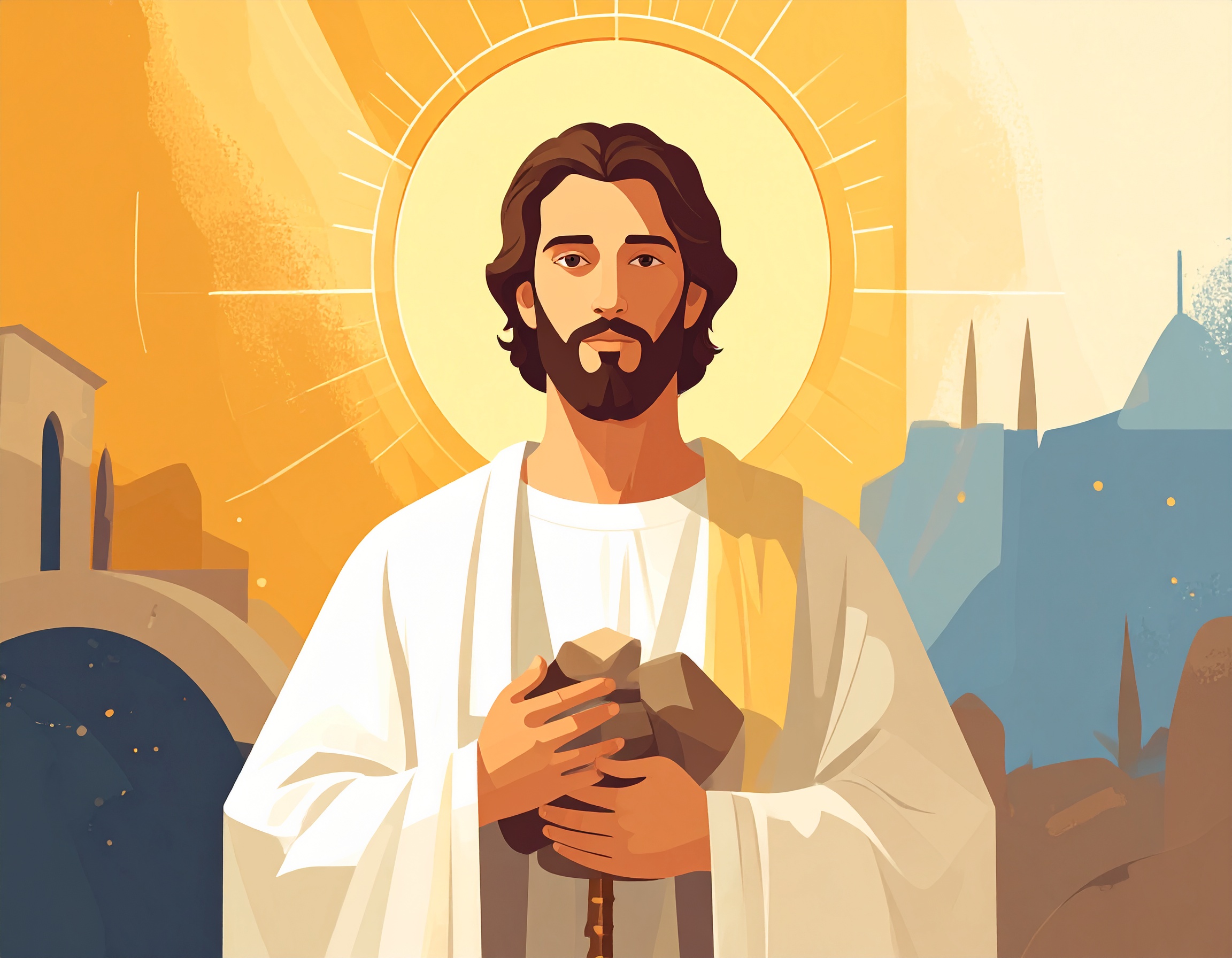
Discover the story of Saint Stephen, the first Christian martyr and a timeless symbol of courage, service and forgiveness.
Saint Stephen: A Story of Courage, Light, and Human Solidarity
The day after Christmas brings the Feast of Saint Stephen. It is a time when the gentle resonance of Christ’s birth still lingers in our hearts. Stephen was the first martyr. He was the first voice unafraid to stand for his faith until his final breath. His story is nearly two thousand years old. It continues to carry a force that speaks to the modern soul. The world often feels divided and weary. It is overwhelmed by noise. Stephen reminds us that true courage is quiet. It is steady and profoundly human.
A Deacon
Saint Stephen was one of the first seven deacons of the early Christian community in Jerusalem. His mission was to care for those on the margins—especially Greek‑speaking widows who felt overlooked within the growing community. But Stephen was not only a servant; he was also a man of deep faith and spiritual strength. According to the Acts of the Apostles, he was “full of faith and the Holy Spirit.” He performed signs and spoke with such wisdom. His opponents could not withstand him.
Martyr
This strength of conviction eventually led to his death. His bold proclamation of Jesus as the Messiah provoked resistance among certain religious leaders. Accused of blasphemy, Stephen was brought before the Sanhedrin, the highest Jewish council. There he delivered a long, powerful speech recounting the history of Israel. And accusing his judges of resisting God’s messengers just as their ancestors had done. His words ignited fury. Dragged outside the city, he was stoned to death, becoming the first Christian martyr around the year 36 CE.
His final words were a plea for forgiveness for those who killed him: “Lord, do not hold this sin against them.” This moment of radical compassion became a symbol of the Christian ideal. It represented offering forgiveness even where most would feel only pain and anger.
Stephen’s Feast Day
In Western Christianity, Stephen’s feast day falls on December 26, the second day of Christmas. The symbolism is striking. After celebrating the birth of Christ, we remember the man who first gave his life for faith in Him. In Eastern traditions, Stephen is commemorated on December 27 or January 9, depending on the calendar used.
In many European countries—including the Czech Republic, Slovakia, Poland, Austria, Germany, and Ireland—this day is a public holiday. And it is in Ireland that one of the most fascinating traditions connected to Stephen has survived: Wren Day. Historically, boys known as “wrenboys” would hunt a wren. The wren was considered the “king of birds.” They would parade it through the village while singing and collecting gifts. Today, the birds are no longer harmed. Still, the lively parades, masks, and music continue. It is a joyful echo of ancient customs transformed by time.
Stephen’s feast is also a day of charity. In some countries, it is linked to the tradition of giving to the poor. This tradition is the origin of Britain’s Boxing Day. On this day, alms boxes in churches were opened and their contents were distributed to those in need. This charitable dimension is the most relevant for today’s world. Stephen reminds us that faith—whether religious or simply faith in goodness—is not just an inner feeling but a concrete act. It is the willingness to see others, to help them, to stand with them even when it is inconvenient.
Nowadays
In our modern era, we often feel overwhelmed by information, conflict, and speed. Stephen’s story can serve as a quiet beacon. It shows us that courage does not need to be loud. Service to others is a form of spiritual strength. Forgiveness is the greatest victory over hatred. Truth has value even when it hurts. Solidarity is a bridge between people that never grows old.
His feast is placed within the Christmas season for a reason. It is to remind us that the joy of Christ’s birth should continue in our actions. The light born in Bethlehem is meant to be carried onward—through us.


Leave a Reply