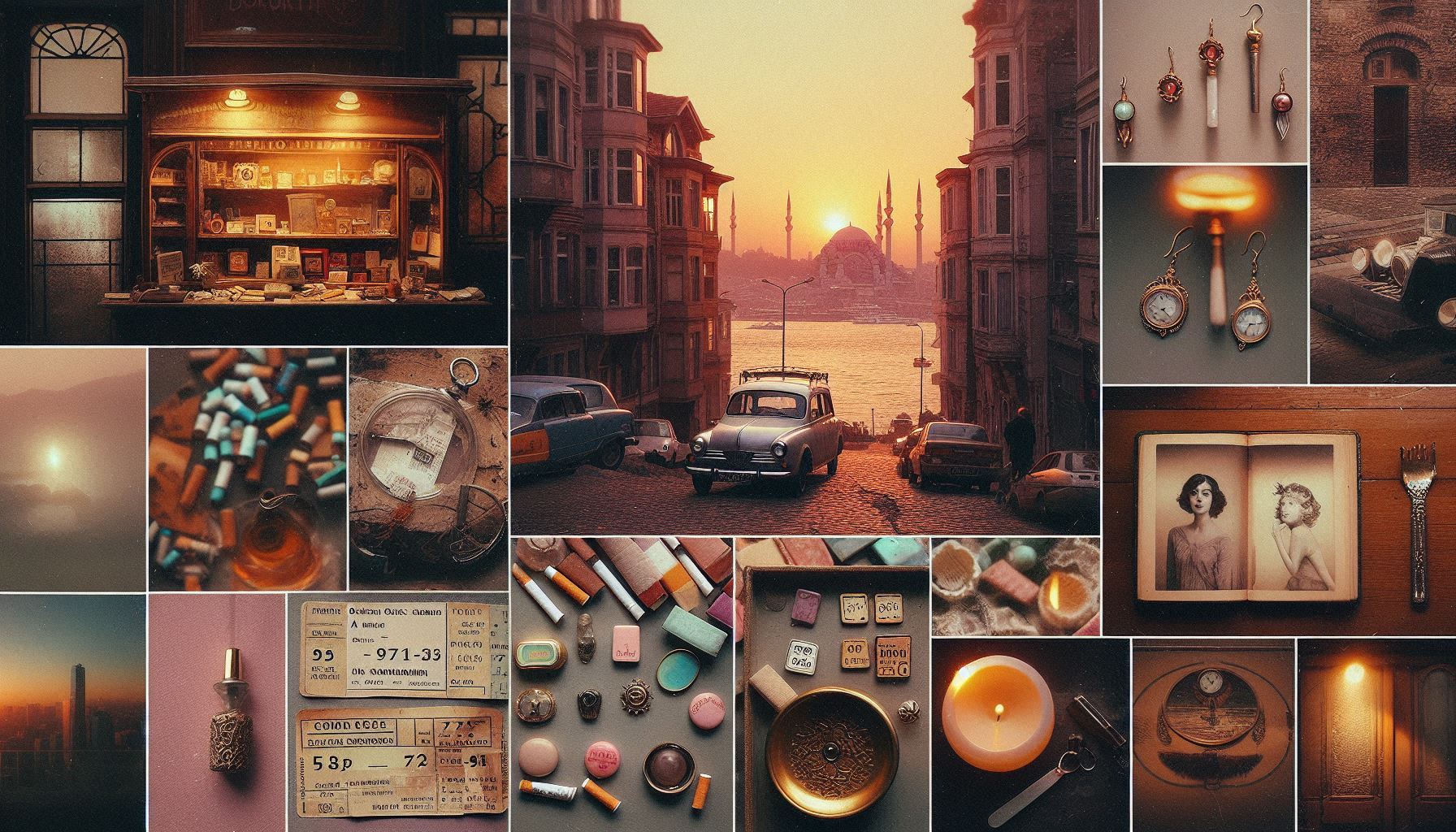
A comprehensive essay exploring Orhan Pamuk’s The Museum of Innocence, its real-life museum in Istanbul, and the 2026 Netflix adaptation, focusing on themes of memory, love, obsession, and the cultural landscape of Istanbul.
Orhan Pamuk, The Museum of Innocence, and Its Netflix Adaptation: A Story of Memory, Love, and Istanbul
Few contemporary writers have shaped the global perception of Turkish literature as profoundly as Orhan Pamuk. His novels are layered and melancholic. They are deeply rooted in Istanbul’s cultural fabric. They explore the fragile terrain between memory and identity, East and West, and personal longing and collective history. Among his works, The Museum of Innocence occupies a singular place. It is a novel, a living archive, and a physical museum. Now it is also a Netflix series that has carried Pamuk’s vision to a worldwide audience.
In this essay, I explore how The Museum of Innocence unfolds across three different mediums. These mediums are literature, museology, and visual storytelling. Each one reframes the same story of love, obsession, and a city in transformation.
Orhan Pamuk: A Life Shaped by Istanbul
Pamuk was born in 1952 into an upper-class but declining Istanbul family. He grew up in a city suspended between continents and identities. This duality—European and Asian, modern and traditional—became the emotional and intellectual foundation of his writing. He abandoned architecture to pursue literature. He published a series of novels that brought him international acclaim. His success culminated in the Nobel Prize in Literature in 2006.
Pamuk’s work often blends postmodern narrative play with historical inquiry. Nonetheless, The Museum of Innocence stands apart for its intimate focus on everyday objects. It highlights personal memory and the emotional archaeology of love.
The Novel: Love, Obsession, and the Language of Objects
The Museum of Innocence was published in 2008. It tells the story of Kemal, a wealthy man. He falls obsessively in love with his distant relative, Füsun. What begins as a secret affair becomes a lifelong fixation. After losing her, Kemal spends years visiting her family home. He collects thousands of objects she touched—cigarette butts, earrings, ticket stubs, salt shakers. These items become the physical anchors of his memories. They form the basis of a museum he eventually creates in her honor.
Pamuk structures the novel in 83 chapters, each tied to a specific object or moment. This fragmented, nonlinear narrative mirrors the way memory works. It does not work as a straight line. Instead, it operates as a constellation of sensations, objects, and emotional residues.
A City as a Character
Istanbul is not merely a backdrop—it is a living presence. The contrast between Kemal’s affluent Nişantaşı and Füsun’s modest Çukurcuma shows the city’s social stratification. It illustrates its uneasy dance between modernity and tradition. Through the novel, Pamuk captures a version of Istanbul that is both intimate and vanishing. It is a city caught in the turbulence of the late 20th century.
Gender and Ethical Questions
The novel has sparked debate for its portrayal of Füsun, whose voice is often overshadowed by Kemal’s obsessive gaze. Feminist critics have questioned whether the museum—both fictional and real—transforms a woman’s life into an object of male desire. This tension between love and possession, memory and control, is central to the novel’s enduring complexity.
The Real Museum: Fiction Materialized
In 2012, Pamuk opened the actual Museum of Innocence in Çukurcuma, turning fiction into a physical space. The museum contains more than a thousand objects arranged in 83 vitrines, mirroring the novel’s chapters. Visitors encounter Füsun’s 4,213 cigarette butts and household items. They also see photographs and artifacts that evoke the texture of Istanbul in the 1970s and 80s.
Pamuk describes the museum as a manifesto for a new museology. It values personal stories over national narratives. It also prioritizes intimate objects over monumental artifacts. The museum won the European Museum of the Year Award in 2014. Since then, it has become a pilgrimage site for literary travelers.
The Netflix Adaptation: A New Lens on an Old Story
In 2026, The Museum of Innocence was adapted into a nine-episode Netflix series produced by Ay Yapım. The series is directed by Zeynep Günay. Ertan Kurtulan is the writer. It recreates the emotional and visual world of the novel with meticulous attention to period detail.
Reimagining Characters
Selahattin Paşalı (Kemal) and Eylül Lize Kandemir (Füsun) bring new emotional depth to their roles. The series expands the perspectives of Füsun and Sibel, addressing critiques of the novel’s male-centered narrative. This shift gives the story a more balanced emotional landscape.
Visual Atmosphere
The production design draws heavily from the real museum. It uses symbolic objects and vintage aesthetics. These elements evoke the novel’s melancholic tone. The muted color palette, textured lighting, and carefully curated interiors create a cinematic Istanbul that feels both nostalgic and timeless.
Reception and Cultural Impact
Critics praised the performances and visual design, though some felt the series softened the novel’s satirical edge. Still, the adaptation introduced Pamuk’s world to a new generation. It sparked renewed interest in the museum itself. This boosted literary tourism in Istanbul.
Three Mediums, One Story
What makes The Museum of Innocence extraordinary is how it exists at the same time as:
- a novel that explores the psychology of obsession,
- a museum that materializes memory through objects,
- a series that translates emotion into visual form.
Each medium highlights different facets of the same narrative. Together, they form a multilayered meditation on love, loss, and the ways we try to preserve what time inevitably erodes.
Conclusion: A Living Archive of Istanbul
The Museum of Innocence is more than a story—it is a cultural ecosystem. Through the novel, the museum, and the Netflix adaptation, Pamuk invites us to consider how we remember. He explores what we choose to preserve and how cities shape the emotional landscapes of our lives.
It is a love story, yes. It is also a story about the fragility of memory. It explores the power of objects and the enduring melancholy of Istanbul.


Leave a Reply