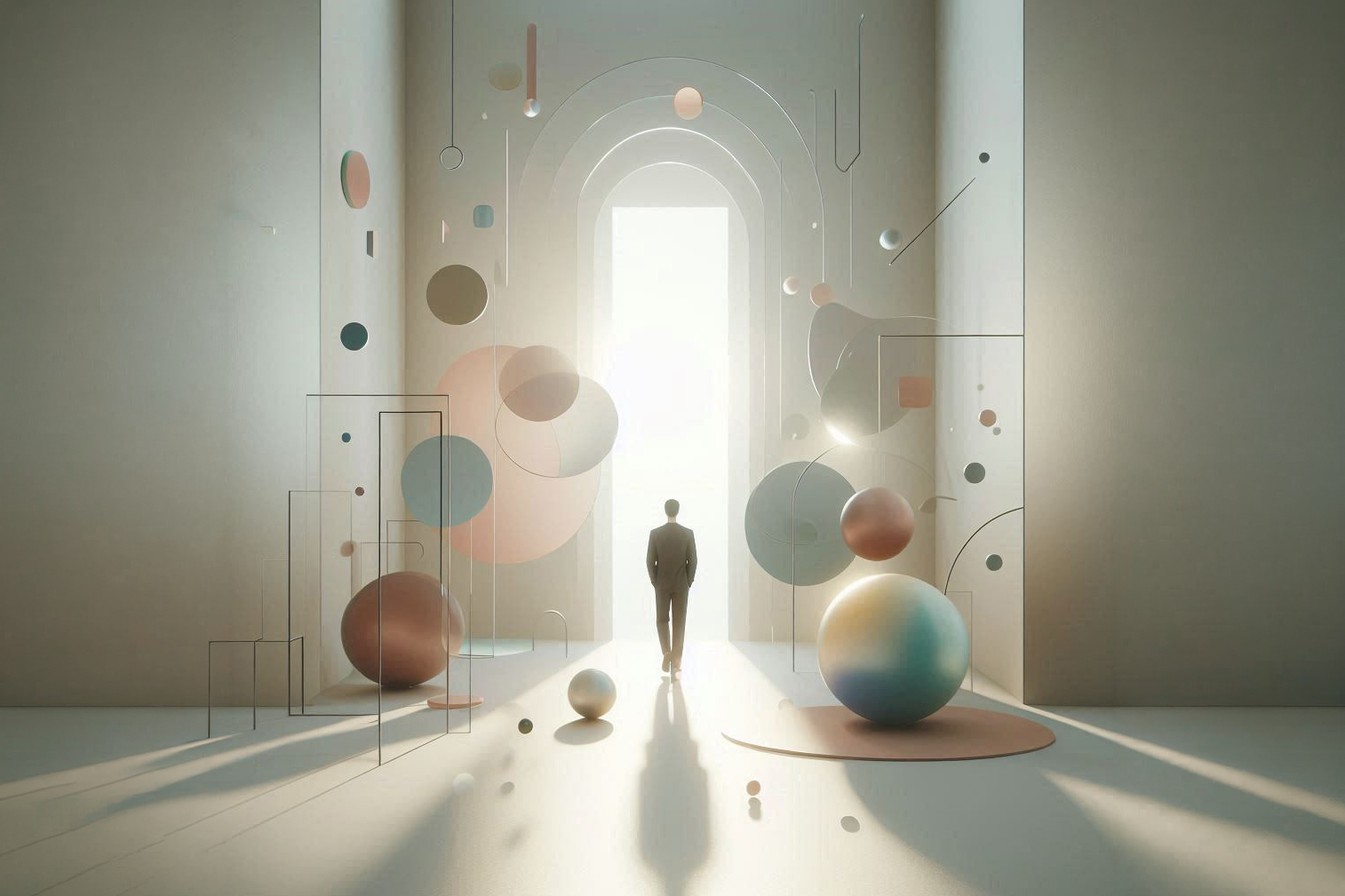
A reflective and inspiring essay about embracing your personal weirdness as a source of authenticity, freedom, and inner strength.
Celebrating Your Weirdness: The Architecture of a Self That Can’t Be Replicated
There is a moment that occurs when a person pauses in the middle of an ordinary day. Sometimes it is brief, other times it lingers, but in that pause, they feel something shift inside. A sentence rises, uninvited but unmistakably true: I am unique. It is not a slogan. It is not a motivational mantra. It is a quiet recognition that comes from somewhere deep and honest. And with that recognition comes another truth: uniqueness often carries a trace of weirdness.
Weirdness is not a flaw. It is the imprint of your inner logic, your rituals, your memories, your wounds, your joys. It is the part of you that didn’t get polished into conformity. The part that stayed alive, curious, unstandardized. The part that refuses to be flattened into something predictable.
This essay is an invitation to celebrate that weirdness. It is not an exception to be excused. Instead, it is a signature to be honored. It examines why our strangeness is not only acceptable. It is essential. Embracing it is one of the most liberating acts of self‑recognition we can offer ourselves.

1. Weirdness as the Shape of the Inner Self
When someone says, “I’m a little weird,” it is often meant as a half‑apology. A way of softening the edges before someone else notices them. But weirdness is simply the shape your inner world has taken over time. It is the result of your experiences, your private rituals, your unspoken thoughts, your quiet preferences.
It is the evidence that you are not a copy.
Every person carries a private language. It is a way of thinking, sensing, and interpreting the world. No one else fully shares it. Some speak this language openly. Others whisper it only to themselves. Many hide it, fearing it will be misunderstood.
But the language of the self is not meant to be universal. It is meant to be true.
And truth, more often than not, looks a little strange.
2. The Beauty of Imperfection
Look at nature: nothing is perfectly symmetrical. Trees grow crooked. Stones form irregular shapes. Rivers bend according to the land, not according to geometry. And yet nature is breathtaking precisely because of its irregularity.
Human beings are no different.
If we were perfectly smooth, predictable, and symmetrical, we would fit every expectation and match every standard. We would be like plastic figurines. Acceptable. But lifeless. Storyless.
Our weirdness is like the knots in wood, the cracks in pottery, the uneven edges of a handmade object. It carries memory. It carries history. It carries the marks of everything we have lived through.
When we look at our weirdness with kindness, we start to see it not as a defect. Instead, we see it as a map. It is a map of who we were, who we are, and who we are becoming.
3. Weirdness as a Space of Freedom
To be weird is to be free.
Weirdness is the space where you are not performing for anyone. It is the place where you breathe without adjusting yourself. Where you move according to your own rhythm. Where you don’t have to justify your preferences, your thoughts, your instincts.
When you embrace your weirdness, you are essentially saying:
This is who I am when I stop trying to be acceptable.
That is a radical freedom. Not loud, not rebellious in the traditional sense — but deeply liberating. It is the freedom of authenticity, the freedom of not hiding, the freedom of being seen without shrinking.
4. Why We Fear Our Own Weirdness
Fear of weirdness is learned. From childhood onward, we are taught to fit in, to blend, to avoid drawing too much attention. Schools reward conformity. Workplaces value predictability. Social norms encourage sameness.
We learn to tuck away the parts of ourselves that feel too unusual. These include intense emotions, unconventional ideas, strange habits, and quiet obsessions. We hide them because we fear judgment. We fear rejection. We fear standing out in the wrong way.
But hiding does not make us smaller; it makes us heavier.
Every suppressed part of ourselves becomes a stone in our pocket. One day, we realize we are walking through life. We are weighed down by pieces of ourselves we were never meant to carry as burdens.
The truth is simple: we fear our weirdness because we fear our power. Because being visible is vulnerable. But it is also beautiful.
5. Celebration as a Ritual of Return
To celebrate your weirdness is not to become someone else. It is to return to yourself. It is to stop apologizing for what is natural. It is to stop trying to be a version of yourself that pleases everyone — and thus pleases no one.
Celebration is a ritual. It can be loud or quiet. It can take the form of writing, walking, or listening to music. It involve sitting in silence or simply acknowledging a truth you have long avoided.
When you celebrate your weirdness, you are saying:
I am here. And I am real.
There is no greater act of self‑respect.
6. Weirdness as a Bridge Between People
It seem paradoxical, but our weirdness is often what connects us most deeply to others. People do not bond over perfection. They bond over vulnerability, over quirks, over the small, strange details that reveal who we really are.
When someone dares to show their weirdness, they create a space where others feel safe to do the same. Suddenly, the air becomes softer. The conversation becomes deeper. The connection becomes real.
Weirdness is not a barrier. It is a bridge.
7. A Beauty That Can’t Be Imitated
In a world obsessed with standardization, there are trends, algorithms, templates, and improvement. Our weirdness is one of the last places where true originality survives.
It can’t be copied.
It can’t be mass‑produced.
It can’t be turned into a formula.
It is the beauty that comes from having lived your own story.
This beauty is not something you can buy or learn. It is something you grow into. Something you earn by being honest with yourself. Something you carry quietly, like a secret that only reveals itself to those who look closely.
8. A Closing Reflection on a Vast Truth
Maybe you are a little weird. Maybe you don’t fit neatly into categories. Maybe your habits, your thoughts, your rhythms don’t make sense to everyone. Maybe you sometimes wish you were more “normal.”
But normal is overrated.
And more importantly — normal is not yours.
What is yours is the strangeness that makes you unmistakably you.
Your weirdness is your signature.
Your compass.
Your story.
Your architecture.
And when you celebrate it, you are not celebrating an oddity.
You are celebrating your existence.
Related posts:
Leave a Reply