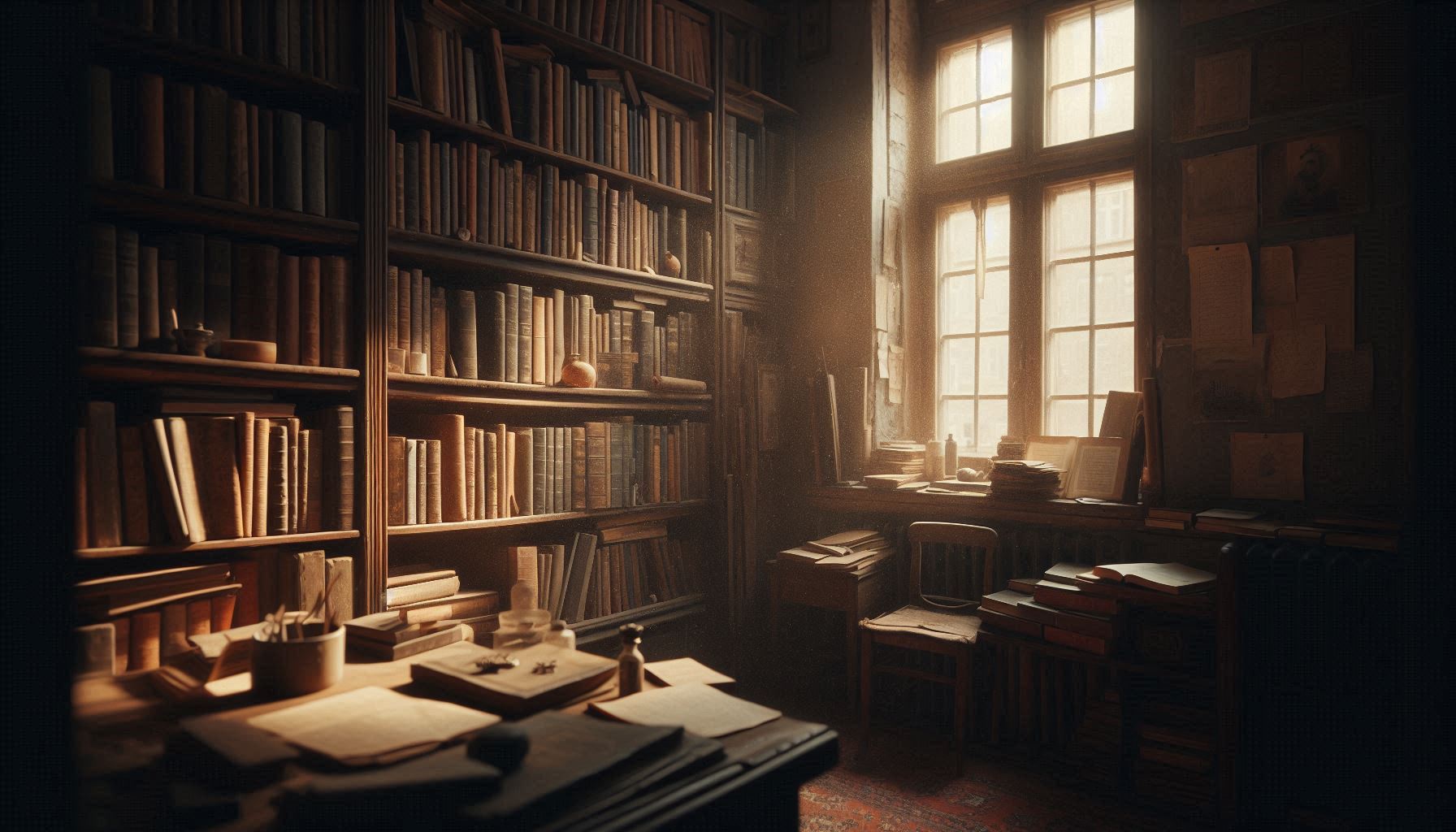
An essay exploring the library as an intimate archive of longing, memory, and personal transformation, connecting physical books, digital spaces, and the emotional geographies of cities like New York, London, and Los Angeles.
My Library Is an Archive of Longing: An Essay on Memory, Space, and the Return to the Self
Introduction: The Library as a Map of the Inner Landscape
Every city has its libraries — public, private, academic, digital. But the most important library is often invisible. We carry it within us.
It is a space where not only books live. Desires and unfinished stories also dwell here. It holds returns that never happened and the questions that follow us through life.
In the English‑speaking world, where literature, personal identity, and spatial memory often intertwine, this metaphor resonates deeply. A library is not merely a room filled with shelves. It is, as Susan Sontag wrote, an archive of longings.
This essay explores how a person builds their own memory-space. It examines how this space becomes ritualized. It also looks at how it guides us back to ourselves.

The Library as a Living Organism
A library is never static. It changes with every year, every return, every new experience. Libraries in New York, London, Los Angeles, or Toronto shift with the people who enter them. Similarly, our inner library evolves with every moment we live.
What Shapes Our Inner Library
- Books we have read — the ones that shaped us.
- Books we abandoned halfway — leaving open spaces inside us.
- Books we own but never opened — symbols of future possibilities.
- Books we lost — becoming myths in our memory.
- Books we gave away — small acts of sharing ourselves.
This organism breathes, expands, contracts, transforms. That is why it holds such power.
The Archive of Longing: What We Truly Preserve
Longing is not sentimentality. Longing is energy — a force that pulls us ahead even when we do not know where we are going. In cultures shaped by migration, memory, and reinvention, longing becomes a central emotional language.
Longing as a Form of Knowledge
Longing is a way of reading the world.
- We long for what we lack.
- We long for what we lost.
- We long for what we never had.
- We long for what is only beginning to form.
Both the outer and inner library become places where these longings are stored, sorted, and rediscovered.
The Geography of Memory: How Space Shapes Want
Every city has its rhythms, its silences, its hidden corners. These spaces become part of our personal archive.
Urban Space as a Memory Landscape
Each place carries traces of those who passed through it. It is a quiet bookshop in London. A late‑night library in New York. It is a café in San Francisco. It is a small independent bookstore in Edinburgh.
In these spaces, our desires take shape:
- the wish for stillness,
- for change,
- the wish for return,
- for a new beginning.
This geography of longing becomes inscribed into our inner library.
The Library as Ritual: How We Build Our Personal Archive
A library is not just a collection. It is a ritual — a way of relating to the world.
Rituals That Shape Our Archive
- Choosing a book — intuitive, accidental, or deliberate.
- Reading — slowly, quickly, repeatedly.
- Underlining — claiming the text as our own.
- Returning — to passages that wounded or healed us.
- Putting aside — when we are not ready.
These rituals are not trivial. They are ways of navigating time, space, and the self.
The Digital Library: A New Layer of Longing
As much of life moves into the digital realm, our libraries transform as well. E‑books, digital archives, online databases — all create a new layer of memory.
Advantages of the Digital Space
- access from anywhere,
- fast search,
- interconnected sources,
- easy sharing.
But the digital library lacks physicality. It is less tactile, less ritualistic, less embodied. And embodiment is what makes a library a library.
Returning to the Body: Why We Still Need Physical Books
A physical book is an object. It has weight, scent, texture. It is an artifact. This materiality is essential to our inner archive.
Why Physical Books Still Prevail
- they create space,
- they carry the memory of touch,
- they shape the atmosphere of a home,
- they become silent witnesses of our lives.
A home library can be found in different living spaces. It is in a small apartment, a suburban house, or a studio loft. Often, it becomes the heart of the home.
The Library as a Personal Map: How to Build It Consciously
If a library is an archive of longing, we can build it intentionally. We can ask ourselves:
- What do I want my library to say
- Which desires do I want to preserve
- Which stories do I want to pass on
Practical Ways to Build a Conscious Library
- Organize by themes, not alphabetically.
- Leave space for future books.
- Create small thematic islands.
- Keep books with personal meaning.
- Share books that no longer belong to your story.
Conclusion: The Library as a Ritual of Return
“My library is an archive of longings.”
This sentence is not only poetic — it is true.
A library is where we meet ourselves. It is the place where our past touches our future. It is a map we draw throughout our lives.
Our library is always a deeply personal space, whether we live in New York. It remains personal in London, Los Angeles, or a small town. It is where our longings are born — and where we can return to them at any time.


Leave a Reply