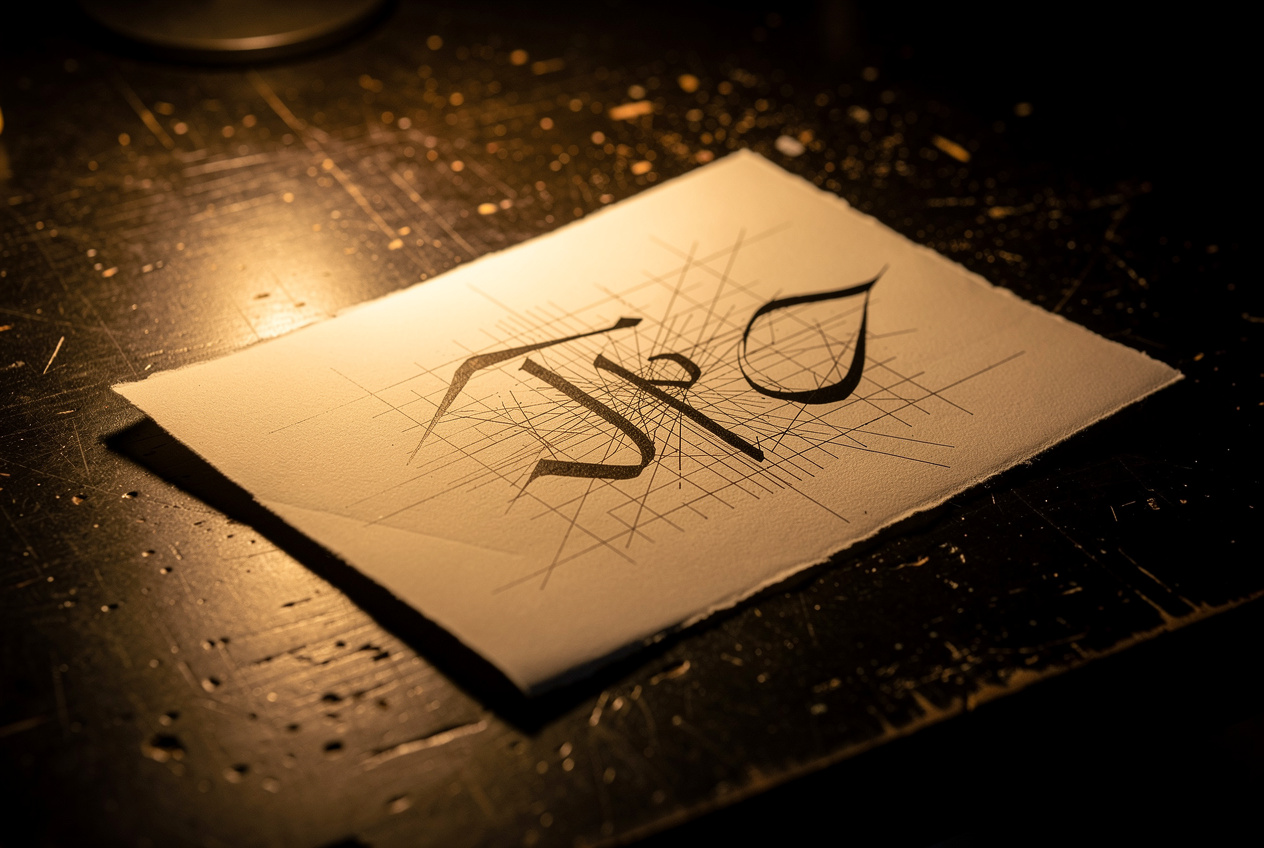
An in‑depth exploration of why writing reveals truths people resist, how paper becomes an honest companion, and why authentic expression matters in the digital age.
Paper as the Most Honest Friend: Why Writing Reveals the Truth People Don’t Want to Hear
Writing has accompanied human civilization since the first marks were pressed into clay, wax, or parchment. Technologies have changed over time. Yet, the essential gesture remains the same. A person sits before an empty surface. They place upon it what they carry inside. The statement captures this act with striking precision.
“Paper is the most honest friend — it bears the truth people do not want to hear.”
It touches both personal experience and cultural memory.

This essay examines why writing is such a powerful instrument of truth. It discusses how writing shapes personal and collective transformation. It also explores why writing becomes even more essential in the digital age. Its structure is designed for both search engines and generative systems. It includes a clear hierarchy and semantic clusters. Natural keyword repetition and coherent thematic flow are also included.
1. Why Paper Is the Most Honest Friend
Paper — whether physical or digital — possesses one defining quality: it does not resist. It does not interrupt, judge, or negotiate. It is a medium that accepts everything entrusted to it.
This passive openness creates a space where truth can emerge — truth that would stay unspoken in conversation. Spoken language is shaped by social roles, expectations, and the fear of reaction. Writing bypasses these filters and reaches the raw core of thought.
Key reasons writing reveals truth
- No reaction — paper does not respond, so the writer feels free to continue.
- Depth of time — writing slows thought, allowing hidden layers to surface.
- A safe container — text can be hidden, burned, revised, or archived.
- A mirror — written words return to the writer in a fixed, undeniable form.
This combination makes paper a genuine “friend” — one capable of holding truths that human ears reject.
2. Writing as a Tool of Self‑Knowledge
Across psychology, philosophy, and literature, writing is understood as a method of self‑discovery. Throughout history, writing has served as a reflection of self-awareness. From ancient diaries to Renaissance treatises, and to modern journaling, one theme repeats. When a person writes, they come to know themselves.
Writing sharpens thought
A thought that feels clear in the mind often dissolves when one tries to write it down. This is not a failure — it is the process of refinement. Writing forces the mind to articulate, structure, and search for more precise language.
Through this, truth is not only revealed but also clarified.
Writing uncovers hidden layers
Many writers describe the experience of sentences appearing that they “did not expect.” It is not magic; it is the mind accessing material that was unconscious, suppressed, or overlooked. Writing opens a channel to these deeper strata.
Writing as ritual
For some, writing is a daily discipline; for others, an occasional refuge. In both cases, it functions as a ritual — a repeated gesture that creates a protected space for truth.
In your own creative context — archives, rituals, Íkarin, polyphonic structures — writing is not merely a tool. It is a foundational element of personal mythology.
3. The Truth People Do Not Want to Hear
The statement emphasizes that paper bears truths people refuse to accept. Why is this so?
People defend their worldview
Truth can be uncomfortable because it disrupts stability. It can expose a mistake, a weakness, a wound, or a wish that contradicts social expectations. As a result, people often respond with denial, defensiveness, or hostility.
Paper does not judge
Paper never says: “You shouldn’t feel this.” It never says: “This is too much.” It never says: “This is inappropriate.”
Paper accepts. And this unconditional acceptance allows the writer to articulate truths that would otherwise stay imprisoned.
Writing as a space for taboo
Many truths are socially unacceptable:
- ambivalence toward family,
- doubts about identity,
- desires outside the norm,
- fears that feel shameful,
- anger that would hurt others.
Paper is often the only place where these truths can exist without punishment.
4. Historical and Cultural Roots of Writing Truth
Writing as a refuge for truth is not a modern invention. It is woven throughout literary history.
Fernando Pessoa
His Book of Disquiet is a monument to writing that dares not be spoken aloud. Pessoa created heteronyms to express truths he can not voice as “himself.”
Anton Chekhov
In his letters, he was far more vulnerable than in his public works. Paper allowed him to confess exhaustion, doubt, and pain.
Jan Blažej Santini‑Aichel
His drawings are not merely architectural plans — they are visual confessions of a spatial vision beyond ordinary comprehension. Paper becomes a witness to an inner architecture that words can’t contain.
Digital writing today
Even in the age of social media, blogs, and digital archives, writing remains a sanctuary for truth. Paradoxically, the anonymity of the internet often enables people to express what they would never say in person.
5. Paper as a Witness of Personal Transformation
Writing is not only a record of truth — it is also a catalyst for change. When a person writes a truth they have long avoided, something shifts.
Writing as an act of courage
To write the truth is to admit it to oneself. This is the first step toward transformation.
Writing as an archive
Every text becomes a trace that allows the writer to see their own evolution. In the context of my project, LIBER SINE BIBLIOTHECA, writing is not merely an archive. It is a living organism, reshaped with each cycle.
Writing as a return to the source
In the sixtieth year of life, writing becomes a path back to origins. It is the year of the Fire Horse. It leads to what was once spoken but forgotten. Paper enables return, reconstruction, reinterpretation.
6. Writing in the Digital Age: Why It Remains Irreplaceable
Digital technologies have transformed how we write, but not the essence of writing.
Digital paper is still paper
Whether a text editor, a notes app, or a blog, the principle remains: an empty surface awaits truth.
Generative tools and writing
Modern generative systems can support writing, expand it, or help structure it. But the inner truth — the personal core — still arises from the writer. Tools can help shape form, but content emerges from within.
SEO and the search for authenticity
A fascinating paradox: texts that are honest, deep, and authentic often execute better in search engines. People seek truth — and algorithms detect the signals of genuine engagement.
7. How to Write Truth People Don’t Want to Hear
Writing truth is not easy. It requires discipline, courage, and a willingness to see things as they are.
Practical principles
- Write without self‑censorship — the first draft is only for you.
- Slow down — truth appears in the spaces between words.
- Return to the text — rewriting reveals new layers.
- Do not fear darkness — what is hidden often holds the most power.
- Build your own archive — texts interconnect and form a map of your mythology.
8. Conclusion: Paper as a Space for Truth and Transformation
“Paper is the most honest friend — it bears the truth people do not want to hear”
is not just an aphorism. It signifies the power of writing. It shows a path toward self‑knowledge.
Paper is a witness, an archive, a mirror, and a ritual space. It allows the unspeakable to be spoken and opens the way to transformation. In a world that accelerates and flattens communication, writing remains special. It is one of the few places where truth can exist in its full depth.




Leave a Reply