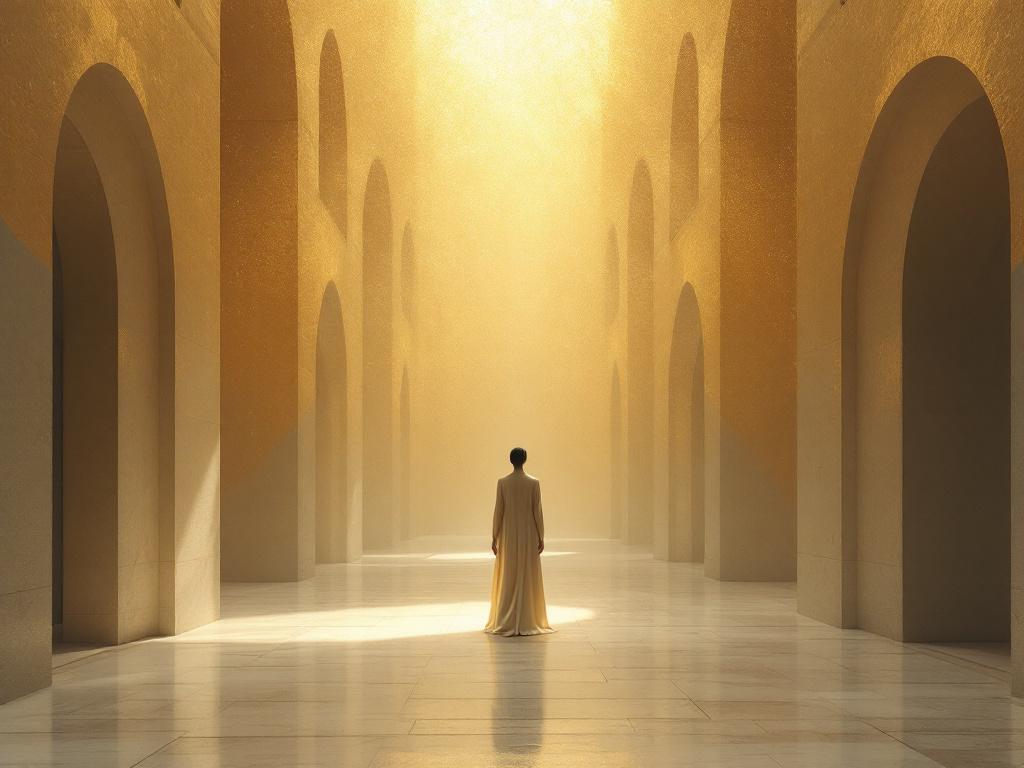
An introspective essay on emotional boundaries, inner peace, and the courage to walk away from people who drain our energy. A reflection on maturity, self-respect, and reclaiming the quiet architecture of one’s inner life.
Table of contents:
- The Quiet Art of Walking Away from People Who Do Not Deserve to Become Problems in Our Lives
- The Weight We Were Never Meant to Carry
- The Skill of Not Participating
- People Who Lose Us Slowly
- The Silent Revolution Within
- The Courage to Stop Apologizing for Protecting Ourselves
- Who Truly Deserves Our Attention
- Discovering That the Power Was Always Ours
- Life Returning to Its Natural Proportions
- A Final Thought
The Quiet Art of Walking Away from People Who Do Not Deserve to Become Problems in Our Lives
There are sentences that return to us like distant echoes, even when no one speaks them aloud anymore. They appear in the pauses between thoughts, in the soft dimness of late evenings, in those fragile moments when we try to understand ourselves a little better. One of these sentences keeps resurfacing in my mind with a strange persistence, as if it were a reminder I have known for years but never fully embraced:
Life is too short to burden ourselves with people who do not deserve to be issues in our lives.
This thought is not harsh. It is not cynical. It is a gentle tap on the shoulder—a reminder that our attention, our energy, and our inner peace are not infinite resources, that we are not obliged to become shelters for storms that are not ours.
This essay is not about rejecting people. It is about reclaiming the quiet architecture of our inner world.
The Weight We Were Never Meant to Carry
We all know someone who enters a room and shifts its atmosphere, not through noise or drama, but through an invisible tension that makes us adjust ourselves to their moods, their expectations, their unspoken demands.
Psychology calls this emotional contagion. I call it exhaustion.
Exhaustion that comes from allowing others to place their anxieties inside us; exhaustion that has nothing to do with compassion and everything to do with the absence of boundaries.
Some stories are not ours to hold. Some people belong not at the center of our lives, but at its edges — if anywhere at all.
The Skill of Not Participating
One of the most underrated skills of adulthood is not how we respond, but when we choose not to respond—not because we are indifferent, but because we understand the value of our own calm.
Sometimes the greatest act of self-respect is the quiet decision:
This is not my battle. This person is not my responsibility.
We do not have to be part of every conflict someone tries to hand us. We do not have to rescue those who refuse to rescue themselves. We do not have to be the emotional scaffolding for people who never learned to stand on their own.
People Who Lose Us Slowly
Not every relationship ends with noise. Some fade like a candle—slowly, quietly, without spectacle.
There are moments when we wake up and realize that something inside us has shifted, that we no longer have the strength to be the version of ourselves someone expects, that we no longer wish to carry a weight that was never ours.
This is not hatred. It is not even disappointment. It is acceptance.
Acceptance that not every connection is meant to last, that not every person we meet is meant to stay.
And there is a strange peace in that realization.
The Silent Revolution Within
When we step away from people who drain us, the first thing that arrives is silence—a silence that may feel unfamiliar, even unsettling. But soon after, something else appears: space.
A space in which our own thoughts return. A space in which our rhythm reawakens. A space in which our inner light stops flickering and begins to burn steadily again.
This is a revolution that does not need manifestos. It does not require dramatic exits. It happens quietly, like a door closing softly behind us.
And another door opening somewhere deeper inside.
The Courage to Stop Apologizing for Protecting Ourselves
Many people confuse boundaries with selfishness, but boundaries are not walls. They are doors, and doors have handles on both sides.
A boundary does not say, “I reject you.” It says, “This is where I begin.” “This is where your right to disturb my peace ends.”
When we stop apologizing for protecting ourselves, our life begins to shift. We stop living as a reaction to someone else’s chaos. We start living according to our own inner order.
And that is not selfishness. That is maturity.
Who Truly Deserves Our Attention
Attention is one of the most precious gifts we can offer another human being. It should not be scattered like confetti.
It belongs to those who:
– see us, not just use us – listen, not only speak – inspire rather than drain – know how to be close without invading our inner space
Such people are rare, and perhaps that is why they matter so deeply.
Discovering That the Power Was Always Ours
The people who complicate our lives the most often have far less power than we imagine. We give them power through our reactions, our fears, and our sense of obligation.
When we take that power back, nothing catastrophic happens. The world does not collapse. It does not fall apart. And we — we finally breathe.
Freedom does not arrive from the outside. It grows from within. It begins the moment we whisper to ourselves: enough.
Life Returning to Its Natural Proportions
When we stop investing energy in people who do not value it, life begins to rearrange itself. Time stops slipping through our fingers. Thoughts become clearer. Relationships become more authentic.
Suddenly, we noticed:
– there is room for what we postponed – there is strength for what truly matters – there is space for people who nourish us rather than deplete us
And most importantly, we return to ourselves.
A Final Thought
Perhaps the truth is simpler than it seems. Perhaps it is not about whom we reject, but whom we choose; not about closing doors, but opening the right ones; not about pushing people away, but allowing ourselves to step toward a life that feels like our own.
And maybe the deepest wisdom lies in this one, deceptively simple sentence:
Life is too short to burden ourselves with people who do not deserve to be issues in our lives.
Not because we are superior, but because we want to live—truly live—not merely endure.
Similar posts:




Leave a Reply