
A reflective essay uncovering the psychological depth of Jane Austen’s work—the silent revolutions of women, the weight of social conventions, and the emotional truths that connect past and present.
Table of contents:
- The Bloody Side of Romance: Jane Austen and the Psychology of the Female Story Across Centuries
The Bloody Side of Romance: Jane Austen and the Psychology of the Female Story Across Centuries
Some works acquire, over time, a soft halo of gentleness—as if they belonged to a world stitched from lace, candlelight, ballroom whispers, and inevitable happy endings. Jane Austen’s novels are often placed inside this delicate frame, perceived as the distilled essence of English period drama: a realm where emotions move quietly and destinies unfold with grace.
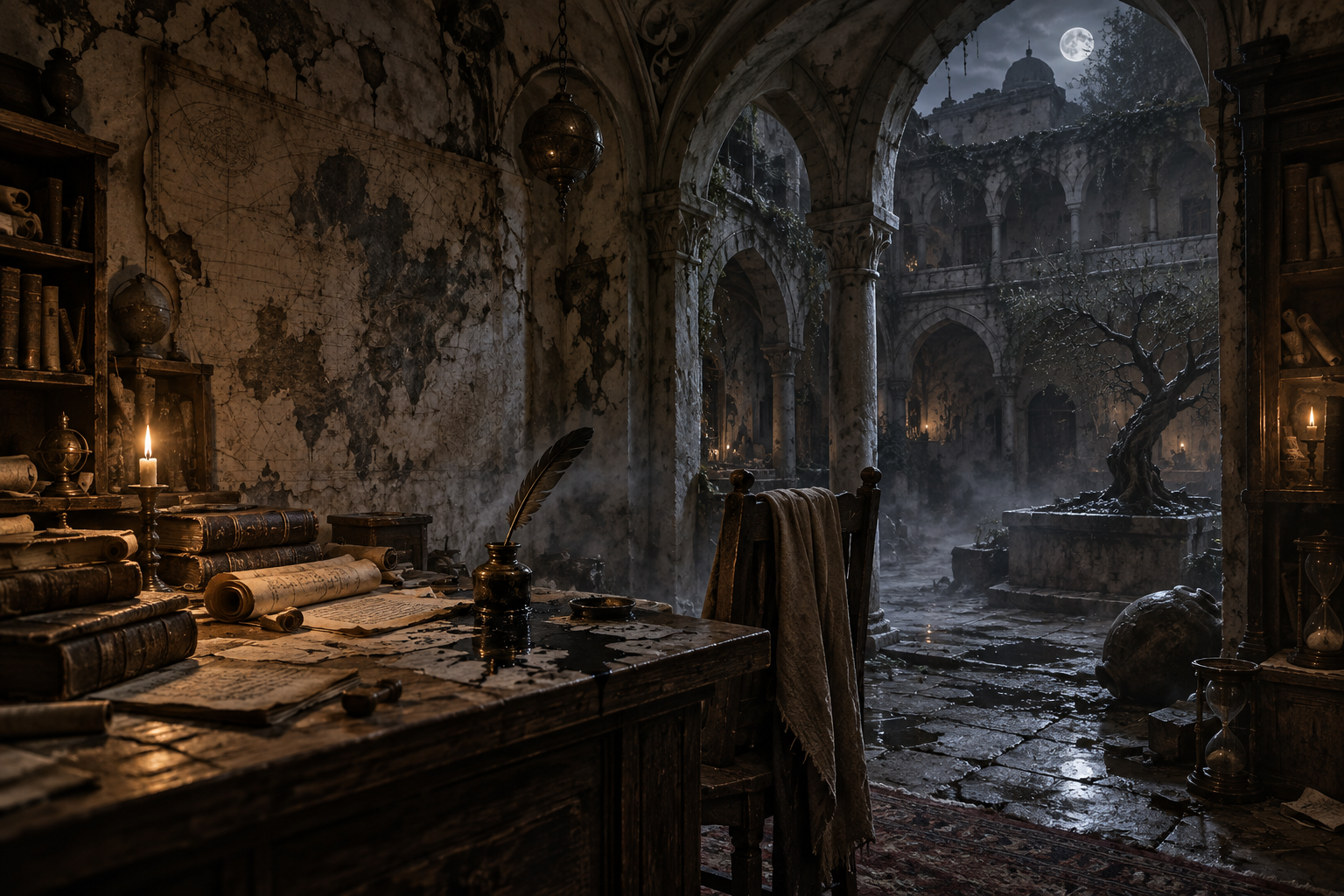
Yet the polyphonic archivist, sifting through layers of time, senses something denser beneath the polished surface—something darker, sharper, and at times merciless. Beneath the social conventions, beneath the glow of drawing rooms and the choreography of polite conversation, lies what might be called “blood on the page.” Not literal blood, but psychological blood: the slow bleeding of invisible wounds, the pressure of expectations, the weight of economic realities that denied women true autonomy.
This essay steps behind the decorative facade to reveal Austen’s deep realism and the psychological complexity that resonates with “the story every woman carries”—a story that transcends centuries, cultures, and social structures. Through this lens, Austen’s heroines become mirrors of universal female experience: the quiet battles, the choices made in silence, the sacrifices hidden beneath composure.
Behind the Lace and the Ballrooms: The Real Drama of Austen’s World
Film and television adaptations often highlight the visual charm of the era—elegant gowns, grand estates, pastoral landscapes. But this aesthetic veil can obscure the harsher truth. Austen’s world is not merely a stage for romance; it is a stage for survival.
The Invisible Violence of Convention
Social norms were not simply rules of etiquette. They were a system of power that confined women to a narrow set of roles. Marriage was less a romantic union and more an economic contract. A woman without money, without a husband, without a “proper” position, risked becoming socially invisible.
This was not physical violence, but a form of psychological domination—subtle, pervasive, and deeply wounding. Foucault might describe it as a network of soft yet omnipresent mechanisms of control. The pressure to marry well, the fear of losing inheritance, and the obsession with reputation—these were the silent forces that shaped women’s lives.
Here, in these quiet pressures, we find the metaphorical blood on Austen’s pages.
The Economics of Marriage and Its Psychological Echoes
The Bennet sisters in “Pride and Prejudice” embody this reality. Their future depends entirely on advantageous marriages. Charlotte Lucas marries Mr. Collins not out of love, but necessity. Her decision is understated, yet profoundly tragic: a surrender of romantic hope, a choice of safety over joy, a quiet acceptance of a life lived in compromise.
Such decisions leave psychological traces—suppressed desires, unspoken grief, internal fractures. Austen never dramatizes them loudly, but they pulse beneath every polite exchange.
Through the Labyrinth of the Soul: The Psychology of Austen’s Heroines
Austen’s heroines—Elizabeth Bennet, Elinor Dashwood, Emma Woodhouse—are not passive figures drifting through society. They are sharp, perceptive, emotionally complex women navigating a landscape of contradictions.
The Story Every Woman Carries
Women have long been expected to balance impossible demands: to be intelligent but not intimidating, charming but not flirtatious, independent but not “too independent.” Elizabeth Bennet embodies this tension. Her wit and clarity of mind are her armor, yet she too stumbles, misjudges, and reveals her vulnerability.
This is what makes her human.
The Dialogue Between the Inner and Outer Worlds
Fernando Pessoa—master of inner labyrinths—would recognize in Austen’s heroines the echo of his own divided selves. They must present one face to the world while conducting intricate conversations within. Elinor Dashwood’s quiet endurance in “Sense and Sensibility” is a study in emotional discipline and inner strength.
Their conflict is not explosive. It is silent, continuous, and deeply human.
Modern Echoes: New Layers, New Meanings
Austen’s stories persist because they are endlessly rewritten. Each adaptation becomes a palimpsest—a new layer written over the old, revealing what was once only implied.
Austen Today
Modern interpretations highlight themes that Austen could only gesture toward: gender inequality, economic coercion, emotional exhaustion, and the absence of female autonomy. These adaptations remind us that the struggle for authenticity is ongoing.
Like the architecture of Santini—dazzling on the surface, intricate, and symbolic beneath—Austen’s narratives reward those who look closely.
The Beauty of Reflection Across Time
Why do these stories endure? Because they offer a mirror—not only to the past, but to ourselves. In Elizabeth’s fight for dignity, we see our own. In Elinor’s quiet sorrow, our own wounds. In Emma’s mistakes, our own blind spots.
It’s like listening to Tchaikovsky: the music is old, but the emotion is always new.
The Universality of the Female Narrative: Bridges Across Centuries
The Continuity of Quiet Revolutions
True revolutions often begin inside. Elizabeth’s refusal to marry without love is a revolution. Emma’s journey toward humility and empathy is another. Their victories are not triumphant marches, but carefully earned moments of inner integrity.
Today, women around the world still face pressure to shrink themselves, to fit into predetermined roles. Like Austen’s heroines, they fight quiet battles for self-determination, for a voice that can be heard, for a life that belongs to them.
Their stories form a palimpsest—layers of inherited expectations and courageous attempts to write a new narrative.
The Power of Expression and Understanding
Literature and art help us process complex emotions and social dynamics. Reading Austen allows us to enter our own “archive of longing.” Writing becomes the most honest companion—a place where we can speak without fear, where the inner world finds language.
It is a way of taking time back, of shaping our own story rather than merely inheriting one.
Conclusion: The Architecture of One’s Own Story
Austen’s work transcends genre and era. It is not a collection of romances but a psychological and sociological exploration of human fate—especially the fate of women caught in the web of convention. The “blood on the page” is not a metaphor for violence but for the quiet suffering, the sacrifices, and the internal battles her heroines endure.
Her stories remind us that even in the most restrictive conditions, resilience, intelligence, and the desire for authenticity can flourish. True strength lies in reflection, in sensitivity to nuance, in the inner dialogue that shapes our being.
These quiet arts of thinking connect us to Austen’s heroines. They were architects of their own stories. So are we.
And in the movement between choice and chance, between sacrifice and freedom, we find the true sentimental value—not in surface romance, but in the layered truth of the human heart searching for its own rhythm.
Similar posts:



Leave a Reply