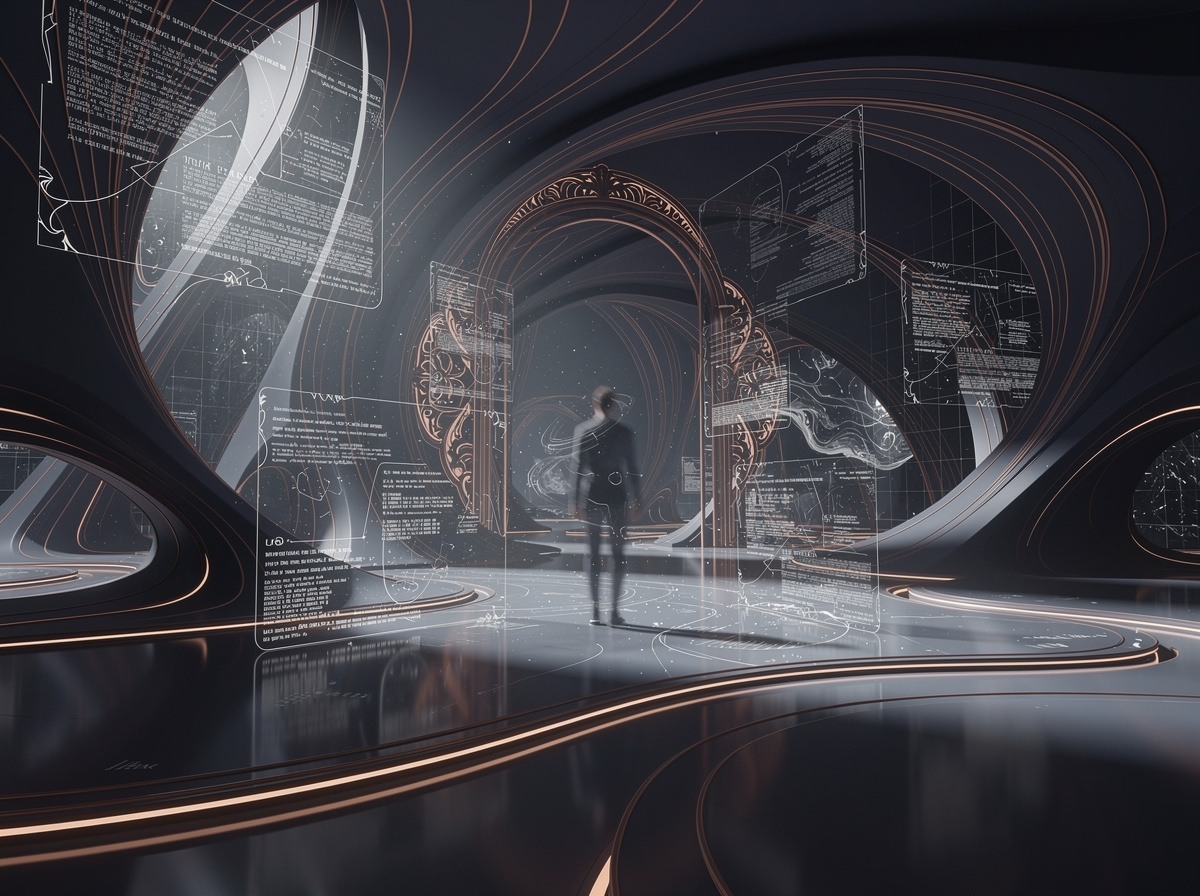
A reflective essay exploring the evolution of the soul, digital loneliness, the moral impact of AI, and the struggle to preserve authentic identity in a Hyperconnected world shaped by algorithms and curated selves.
Table of contents:
- The Soul in the Digital Mirror: The Architecture of the Self in a Kakophony of Connection
- The Historical Soul: From Antiquity to Modern Psychology
- Digital Loneliness: Why We Feel Alone While Constantly Connected
- AI and Moral Formation: Can Artificial Intelligence Shape Our Humanity?
- The Survival of the Authentic Self: Escaping People‑Pleasing and Finding Real Connection
- Conclusion: Returning to Ourselves in a Blurred World
The Soul in the Digital Mirror: The Architecture of the Self in a Kakophony of Connection
There are epochs that stretch the human psyche beyond anything previously imaginable. The digital age is one of them—an era pulling us into a vortex of endless information, instant interactions, and virtual communities, while paradoxically leaving many of us wandering through landscapes of profound existential loneliness. “Where, in this digital labyrinth, does our soul hide, our authentic self?”
This essay, guided by the hand of the Polyphonic Archivist, follows the philosophical lineage of “soul” and “self,” confronting it with the psychological and technological realities of our time. It asks how our inner world has evolved, why we feel alienated despite constant connection, how artificial intelligence shapes our moral compass, and how—against the current of people-pleasing—we can remain whole. It is a descent into the depths of identity, a search for quiet sources of meaning in an era that never stops shouting.
The Historical Soul: From Antiquity to Modern Psychology
The concept of the soul—anima, psyche—is as old as human consciousness. Since the dawn of civilization, people have tried to grasp the elusive spark distinguishing the living from the lifeless, the conscious from the unconscious. In ancient Greece, the cradle of Western philosophy, the soul was seen as the principle of life, often linked to breath. Plato imagined it as a tripartite entity—reason, will, desire—each part needing harmony to sustain a balanced life. The soul was immortal, originating in the realm of ideas and returning there after death.
Aristotle softened Plato’s dualism but still viewed the soul as entelechy, the form of the body, its active principle. Plants had vegetative souls, animals sensory ones, and humans rational ones. The soul was not merely subjectivity; it was the structure of being.
The Middle Ages added a theological dimension. The soul became an immortal essence created in God’s image, striving for salvation. This worldview shaped European culture for centuries. Baroque architecture — like the works of Santini — embodied this longing: verticality, dynamism, complexity, all pointing upward, mirroring the soul’s desire for transcendence.
With the Enlightenment came a shift. René Descartes, though a dualist, laid the groundwork for understanding the mind as a separate substance, redirecting attention from the soul to consciousness. In the 19th and 20th centuries, psychology secularized the soul entirely. Freud transformed it into a structure of the psyche—consciousness, preconscious, unconscious—shaped by drives and repressed desires. Jung expanded it with archetypes and the collective unconscious, mapping an inner world deeper than individual experience.
Thus, the soul became the “self,” identity, personality—a constellation of psychological processes defining who we are. This shift from metaphysical to psychological prepared the ground for the digital age, where the self could be analyzed, quantified, and manipulated, its boundaries dissolving in the network of connections.
Digital Loneliness: Why We Feel Alone While Constantly Connected
The paradox of our era is sharp: humanity has never been so interconnected, yet never have so many felt so profoundly alone. Social networks and communication platforms create an illusion of closeness while masking the absence of intimacy. We feel lost in a web where every interaction is a potential threat, demanding a flawless presentation of the self.
Why does loneliness deepen despite hyper-connectivity? One reason is the relentless curation of our lives. Each user becomes editor, director, and actor of their own narrative, selecting images and words to represent an idealized version of themselves. This “curated self” longs for approval—likes, hearts, digital affirmations.
At the same time, the quality of relationships declines. Thousands of online “friends” cannot replace a handful of people who truly know our inner thresholds, our quiet fractures, our unspoken desires. Digital interactions are fragmented, shallow, and stripped of nuance. We miss the unspoken language of presence—the silence, the gesture, the shared breath.
Digital loneliness becomes a psychological reality. FOMO—the fear of missing out—keeps us online even when we long to be alone. Pessoa wrote, “Life is what we make of it in our imagination,” yet in the digital world, our imagination is constantly invaded by the imaginations of others. Our inner space shrinks.
Protecting our authentic self—our inner fire—becomes an act of self-defense.
AI and Moral Formation: Can Artificial Intelligence Shape Our Humanity?
The rise of artificial intelligence introduces a new dimension to the question of identity. Algorithms influence what we buy, what we believe, and even how we feel. Can AI reshape our understanding of what it means to be human?
A central issue is how AI is “morally educated.” Algorithms learn from human data — data full of biases, stereotypes, and inequalities.
Another concern is the outsourcing of moral decisions. Medicine, justice, interpersonal interactions—if algorithms take over, what happens to human responsibility? Does our moral judgment weaken when machines decide for us?
The deepest question: If AI can simulate empathy, creativity, even something resembling consciousness, where does human uniqueness lie? Does this not challenge the very essence of the soul?
Perhaps the greatest danger is that our inner voice becomes quieter, overshadowed by algorithmic certainty.
The Survival of the Authentic Self: Escaping People‑Pleasing and Finding Real Connection
In the digital cacophony, staying authentic becomes a heroic act. People-pleasing—the urge to satisfy others at the cost of oneself—intensifies online, where every interaction can bring validation or rejection. It erodes authenticity, breeds anxiety, and creates shallow relationships.
How do we return to ourselves?
1. Cultivating the Inner Archive
The first step is returning to our “archive of longing,” the inner library holding our unfiltered thoughts and emotions. Journaling, reflective essays, and artistic creation—these reconnect us with our true self. As the text quotes: “Paper as the Most Honest Friend.” Paper carries the truths we fear to speak.
2. Setting Boundaries in the Digital Space
Authenticity requires protection. Limiting social media time, choosing information sources consciously, and practicing digital detox—these create space for silence and depth. It is like stepping out of a parent’s shadow—not by fleeing, but by transforming the shadow into material we can work with.
3. Seeking Deep Connections
Real connection is born from vulnerability. A few intimate relationships matter more than thousands of superficial ones. It means showing the “book of our oddities,” risking rejection, and opening the door to empathy.
4. Listening to the Inner Voice
Amid digital noise, we must rediscover the quiet voice whispering: “Something else is possible.” Courage appears after the first step—and that step is often simply listening.
Conclusion: Returning to Ourselves in a Blurred World
The search for identity in the digital age is not linear. It is cyclical, shifting, returning. The soul—once metaphysical, then psychological—now faces new pressures. Hyperconnectivity breeds loneliness, AI redraws the boundaries of humanity, and the demand for constant visibility threatens authenticity.
Yet the soul is not lost. It requires conscious protection, quiet cultivation—a silent revolution unfolding within us, often without witnesses. Not a triumphant march, but the ability to accept our own story with its choices, accidents, sacrifices, and regrets. Life is beautiful in its imperfection, in its layers.
This era forces us back to the true sources—the quiet art of thinking, observing, archiving our desires, creating our own language. Ultimately, it is about reclaiming time, refusing to live by the rhythm of algorithms, choosing instead the rhythm of the soul.
Only then can we become “the person who returned from their own time“ — calmer, deeper, clearer, creating not from lack but from fullness.
Similar posts:


Leave a Reply